
Тестовая проверка публикации постов SEO Super Tool (временный пост, будет удалён).
Top 14 melhores casinos online em maio 2026
Assim, dois pagamentos com o mesmo https://3hotchillipeppers.com/ nome podem ter tratamentos diferentes. Na prática, esse nome pode designar uma gratificação salarial, um prêmio por desempenho superior ou até uma participação nos lucros e resultados. O que importa é a razão do pagamento, como os critérios foram estabelecidos e se a prática corresponde ao que foi documentado.
Nós pesquisamos nos cantos mais distantes da internet, só para lhe trazer os 10 melhores casinos online em Portugal neste momento. As apostas realizadas nos cassinos online são feitas com dinheiro real, e os ganhos também são pagos em dinheiro real. Os jogos de casinos online disponíveis são os mesmo encontrados nos casinos reais, mas com maior variedade. Estes bónus são interessantes por oferecer a oportunidade de jogar sem colocar o seu dinheiro em risco, e costuma ser oferecido no depósito inicial. Os bónus de cassino online são recompensas em dinheiro oferecidas aos utilizadores.
Analisamos sempre a dimensão e diversidade do catálogo de jogos disponível, embora seja comum ver uma plataforma a entrar no mercado com um catálogo reduzido. Só os novos casinos online que têm licenças emitidas pelo regulador podem operar legalmente em Portugal e garantem que o utilizador joga protegido e tem acesso a mecanismos de jogo responsável. O primeiro critério, e o mais importante, é a existência de pelo menos uma licença emitida pelo Serviço de Regulação e Inspeção de Jogos (SRIJ). Quanto à retirada dos fundos da conta, não existem levantamentos imediatos, o único método disponível é a transferência bancária e permite levantamentos imediatos.
Comparamos os melhores casinos online em Portugal legais para que não se preocupe sobre qual escolher. Na maioria dos casos, existem aplicações tanto para iOS como para Android, perfeitamente otimizadas e com as mesmas ferramentas que em desktop. Experimenta um novo jogo, experimenta uma nova estratégia, ou simplesmente desfruta de jogos de casino grátis.
- A jogabilidade é fluida, com boa adaptação ao ecrã móvel e navegação simples entre jogos, promoções e métodos de pagamento.
- Confira as análise presentes aqui no OnlineCassino.com.br, pois elas vão ajudá-lo a tomar a melhor decisão na hora de escolher um cassino online para apostar.
- Os melhores casinos online oferecem uma vasta seleção de jogos.
- De lá saem os documentos que deixam os operadores abrir jogo online em vários países ao mesmo tempo.
- Cada um deles tem por base auditorias às suas caraterísticas de segurança, pagamentos, ofertas de bónus, desempenho de software e diversidade de jogos.
- Quais são as principais características e estatísticas dos melhores casinos online com dinheiro real?
A exclusão previdenciária do prêmio depende de sua caracterização correta. Se a mesma consultoria promete um valor fixo todos os meses pelo simples cumprimento do prazo normal, o pagamento se aproxima de uma contraprestação pelo trabalho. Em uma campanha específica, a equipe conclui a etapa em oito dias, sem retrabalho e acima da meta documentada. Uma consultoria define que o prazo ordinário para concluir determinada etapa de um projeto é de dez dias, com parâmetros mínimos de qualidade. A CLT informa que prêmios verdadeiros não integram a remuneração mesmo quando habituais. Para sustentar o tratamento de prêmio, a empresa precisa demonstrar conjuntamente os elementos previstos na CLT e interpretados pela Receita Federal.
Outro aspecto essencial é a variedade de jogos de cassino. Por fim, mas não menos importante, um cassino online de confiança deve estar comprometido com o Jogo Responsável. Por isso, ao indicarmos um site, verificamos se este casino online cumpre os melhores requisitos do setor. Além disso, os dados sensíveis dos jogadores, como informações pessoais, documentos e dados de contato, como e-mail e telefone, devem ser armazenados com segurança.
Consulte os termos e condições de cada site para saber tudo o que é necessário antes de começar a jogar. Ao contrário dos bónus de boas-vindas, que têm a necessidade de depósito, estes não têm nenhum tipo de risco, e ainda que sejam pequenos ou pouco atrativos, são realmente grátis, sem nenhuma contrapartida. Já no caso do saldo, que é uma oferta menos comum, a casa de apostas oferece um valor em bónus, e escolhes livremente onde queres apostar, e com que valor. O valor pode ser disponibilizado para apostares de uma só vez, ou repartido entre várias apostas à escolha.
Ou seja, a variedade de jogos com RTP alto, além da volatilidade e da porcentagem de ganhos. Depois de falarmos sobre ofertas e promoções, também analisamos outros aspectos importantes em um cassino online. Se houver um cassino ao vivo com jogos online em tempo real, como blackjack ao vivo e poker online, melhor ainda. Dessa forma, analisamos a variedade de caça-níqueis, jogos de mesa e cartas disponível em cada plataforma de jogos de cassino.
Os sites de cassino online vão se esforçar para que você tenha uma boa experiência de jogo, sem problemas. Isso vale especialmente para quem fez o uso de bônus de cassino e está relacionado à quantidade de vezes que você precisa apostar o valor de bônus; No entanto, para aqueles que procuram uma experiência verdadeiramente ao estilo de James Bond, as versões de Live Baccarat podem proporcionar uma experiência fidedigna. Além disso, oferecemos ferramentas premium para garantir que você tenha à mão todos os detalhes sobre os melhores cassinos online do Brasil. Foram analisados detalhes muito importantes, como os métodos de pagamentos e a seleção de jogos disponíveis. Para ajudar você a escolher os melhores cassinos online, nossos especialistas criaram um top list destacando as principais vantagens de cada um deles.
Em Junho de 2026, os dez melhores casinos online legais disponíveis são a Lebull, Solverde, Betclic, Bwin, VERSUSbet, ESC Online, Betano, Luckia, 888 Casino e BacanaPlay. Em Julho de 2026, os melhores casinos online legais em Portugal são a Lebull, Solverde, Betclic, Bwin, VERSUSbet, ESC Online, Betano, Luckia, 888 Casino e BacanaPlay. Após ter recebido duas licenças do SRIJ, a Retabet, uma casa presente em Espanha, prepara-se para entrar em Portugal com uma oferta de casino online focada em slots.
Em geral, slots contribuem 100%, dólar por dólar, libra por libra, ou euro por euro, nos jogos de casino online. Às vezes, os casinos online impõem um limite máximo para os prémios máximos permitidos oriundos de bónus sem depósito. Cada casino online com um código sem depósito possui regras específicas em vigor com respeito aos requisitos para levantamento de bónus. Os jogadores podem jogar jogos a dinheiro real e beneficiar de modo potencial sem necessidade de depósito.
Pelican Casino Bonus – Bonusy Waterfall Dla Graczy z Polski
Jeśli chcesz dołączyć do kasyna które nie znajduje się na naszej stronie, polecamy aby najpierw wyszukać wszystkie informacje i upewnić się, że dane kasyno jest bezpieczne. Jest wiele powodów dla których warto grać w kasynach internetowych. Teraz masz już wszystkie środki i zasoby, aby rozwijać się w świecie hazardu online, a kasyna które akceptują graczy z Polski są gotowe na Ciebie! Ustal limity i nie obstawiaj pieniędzy, na których utratę nie możesz sobie pozwolić. Oznacza to, że możesz wypróbować większość gier używając pelican casino kod promocyjny wirtualnych pieniędzy bez konieczności wpłacania swojej gotówki!
Działalność Pelican Casino Polska prowadzona jest zgodnie z międzynarodowymi normami prawnymi i na podstawie licencji uzyskanej od specjalnego regulatora z Curacao. Dzięki tak bogatej ofercie, każdy znajdzie coś dla siebie. Ten okres pozwolił nam nie tylko skupić się na dopracowaniu oferty, ale także zapewnić naszym graczom wysokiej jakości produkt z cennymi korzyściami. Pelican Casino działa na rynku iGaming od ponad 5 lat, od momentu powstania w 2019 roku. Liczba opcji płatności na tej stronie jest ponadprzeciętna i odzwierciedliliśmy to w ocenie, jaką nasz zespół recenzencki przyznał tej stronie.
Pelican Casino to uznane kasyno online, które stara się oferować możliwie najwygodniejsze opcje płatności dla swoich graczy. Depozyty kart o wartości poniżej 50 USD podlegają opłacie w wysokości 2 USD. Wszyscy gracze docenią bonus bez depozytu w wysokości 15 €. Oprócz slotów, w hali gier dostępne są również gry stołowe i kasyno na żywo. Kasyno Pelican jest jednym z najpopularniejszych kasyn w Europie Środkowej, choć nie posiada ani jednej lokalnej licencji. Od 2025 roku strona kasyna jest w pełni przetłumaczona na język polski oraz niemiecki, co ułatwia korzystanie z platformy.
Сhосіаż mаją dużу wуbór gіеr і bоnusów, ро kіlku gоdzіnасh grу nіе udаłо mі sіę wуgrаć żаdnусh nаgród. Mоżеsz skоntаktоwаć sіę z ісh рrzуjаznуmі і роmосnуmі аgеntаmі wsраrсіа рорrzеz сzаt nа żуwо lub, jеślі sрrаwа nіе jеst tаk ріlnа, рорrzеz е-mаіl. W rzесzуwіstоśсі, nіе sрrаwіа tо, żе grа jеst gоrszа nа urządzеnіасh mоbіlnусh, аlе ро рrоstu sрrаwіа, żе dоśwіаdсzеnіе jеst о wіеlе lерszе. Czat na żywo jest dostępny na stronie internetowej kasyna i zapewnia szybką reakcję na pytania i problemy graczy. Chociaż Pelican Casino jest dostępne dla wielu graczy na całym świecie, istnieją pewne ograniczenia dotyczące dostępu do kasyna.
Graj online zarówno za darmo, jak i za prawdziwe pieniądze
Obowiązują ogólne warunki i zasady strony internetowej. Obowiązują Ogólne Warunki i Warunki Promocji. Casino Mega zastrzega sobie prawo do zmiany oferty oraz do anulowania bonusu w przypadku nadużyć. Wszelkie wygrane powyżej tej kwoty zostaną usunięte z salda. Zastosowanie mają pełne warunki regulaminu Spinline. Darmowe spiny aktywowane w ciągu 7 dni od depozytu, ważne przez 7 dni.
Jak Odebrać Bonus w Pelikan Kasyno — 6 Prostych Kroków
Środki pojawią się na Twoim koncie w ciągu kilku minut, co umożliwi natychmiastowe rozpoczęcie gry. Po założeniu konta będziesz mieć możliwość dokonywania wpłat, wypłacania wygranych oraz gry w różnorodne gry kasynowe. Płatności w kryptowalutach oferują niskie prowizje, szybkie transakcje, anonimowość, a także zwiększone bezpieczeństwo finansowe. Na naszej stronie wdrożono zaawansowane szyfrowanie kryptograficzne SSL, które chroni wszelkie dane osobowe i transakcje finansowe graczy.
Czas ważności freespinów przyznanych w ramach oferty powitalnej lub środowych promocji jest określony w regulaminie każdej akcji – zazwyczaj wynosi od 24 do 7 dni od momentu przyznania. Szczegółowe zasady znajdują się zawsze w regulaminie konkretnej oferty dostępnym na stronie Pelican Casino. Tak, Pelican Casino bonus bez depozytu jest dostępny w ramach specjalnych akcji promocyjnych. Szczególne miejsce w portfolio Pelican Casino promocji zajmuje bonus bez depozytu. Pelican Casino regularnie organizuje codzienne i tygodniowe turnieje, w których gracze rywalizują o dodatkowe nagrody pieniężne i pule nagród.
- Wplacilem przelew bankowy, potem wyplacilem przez SEPA – srodki na koncie w 2 dni robocze.
- E-portfele i kryptowaluty – najszybciej (zazwyczaj do 24h).
- Pakiet powitalny na 3 depozyty jest OK, ale bonusy tygodniowe Butterfly Staxx bez wagera na spiny to moj faworyt.
- Pierwsza wypłata wymaga weryfikacji KYC.
- Transmisja przez przeglądarkę, bez aplikacji.
Pelican casino bonus kryptowalutowy to 350% od wpłaconej kwoty, co przy odpowiednim depozycie daje łącznie do 2500 PLN na koncie bonusowym. Pelican casino kod promocyjny to nie tylko hasło — to konkretny mechanizm, który wymaga zrozumienia, zanim wpłacisz środki. W razie pytań skontaktuj się z obsługą klienta dostępną 24/7 przez czat na żywo lub pod adresem email protected. Pelican Casino promocje tworzą jeden z najbardziej kompleksowych systemów nagród dostępnych na polskim rynku gier online.
Tak, Pelican casino bonus codes oferują graczom dodatkowe promocje, takie jak darmowe spiny czy bonusy do depozytu. Jednym z największych atutów platformy jest oferowanie Pelican casino no deposit bonus, który umożliwia nowym użytkownikom rozpoczęcie gry bez konieczności wpłacania własnych środków. Z pelican casino no deposit bonus oraz pelican casino bonus za rejestrację można rozpocząć grę od razu, ciesząc się pełną ofertą gier i promocji. Po rejestracji bonus jest automatycznie przyznawany do wykorzystania na wybranych grach, takich jak automaty czy gry stołowe. Aby skorzystać z Pelican casino no deposit bonus codes, należy wpisać kod przy rejestracji konta lub w sekcji z promocjami w swoim profilu. W przypadku bonusu Pelican casino no deposit bonus codes, gracz otrzymuje określoną kwotę pieniędzy lub darmowe spiny bez potrzeby wpłacania depozytu.
To miejsce, gdzie klasyka spotyka się z nowoczesnością, a każdy gracz znajdzie coś dla siebie — od miłośników jednorękich bandytów po fanów emocjonujących rozgrywek na żywo. Regularne kontrole, jasne zasady i zero ukrytych haczyków. Wchodzisz, rozglądasz się, czujesz ten dreszcz emocji — ale zanim naciśniesz „Zagraj”, chcesz mieć pewność, że wszystko odbywa się zgodnie z zasadami.
Sanatorium Secrets od Pragmatic Play przenosi graczy do mrocznego szpitala, oferując symbole Wild zajmujące całą kolumnę. Rynek automatów do gier online nieustannie się rozwija, a w ciągu ostatnich dwunastu miesięcy zadebiutowało wiele tytułów wartych uwagi. Slot ten oferuje ponadto możliwość aktywacji bonusowej funkcji w postaci darmowych spinów, które również mogą być bardzo dochodowe, gdyż pozwalają na zdobycie aż do 19,000x zakładu. Sakura Fortune 2 od Quickspin kontynuuje piękną, azjatycką estetykę swojego poprzednika, slotu Sakura Fortune, oferując graczom ponowne spotkanie z księżniczką, która walczy z złymi mocami. Rozbudowane mnożniki w rundzie bonusowej sprawiają, że ta wersja oferuje wyraźnie wyższy pułap wygranej niż automat, na którym się wzorowała. Sweet Bonanza 2500 to nowsza wersja jednego z najbardziej rozpoznawalnych automatów Pragmatic Play, zachowująca cukierkowy motyw kolorowych owoców i słodyczy.
Whales: Giants of the Ocean
Whales: Giants of the Ocean
Whales are among the largest and most remarkable animals on Earth. These marine mammals live in oceans around the world, from warm tropical waters to the cold seas surrounding the poles.
Life Beneath the Surface
Although whales spend their lives in water, they breathe air through blowholes located on top of their heads. They must regularly return to the surface to breathe before diving again in search of food or traveling through the ocean.
Whales are warm-blooded, give birth to live young, and nurse their calves with milk. A thick layer of fat called blubber helps protect them from cold water and stores energy during long migrations.
Two Main Groups
Whales are generally divided into baleen whales and toothed whales. Baleen whales filter small animals from the water using flexible plates inside their mouths. This group includes blue whales, humpback whales, and gray whales.
Toothed whales use teeth to catch fish, squid, and other prey. Many of them also use echolocation, producing sounds and listening for returning echoes to understand their surroundings. Sperm whales, belugas, and orcas belong to this group.
The Blue Whale
The blue whale is the largest known animal to have ever lived. An adult can grow longer than a city bus and weigh well over one hundred tonnes. Despite its enormous size, it feeds mainly on tiny crustaceans called krill.
Communication and Migration
Whales communicate using clicks, whistles, pulses, and complex songs. Some sounds can travel across great distances underwater. Humpback whales are especially famous for their long, patterned songs.
Many species migrate thousands of kilometres each year. They often feed in cold, nutrient-rich waters before traveling to warmer regions where they mate and give birth.
Protecting Whales
Commercial hunting once caused severe declines in many whale populations. Today, whales also face threats from fishing gear, ship collisions, underwater noise, pollution, and changes to ocean ecosystems.
Conservation programs, safer fishing practices, protected habitats, and international cooperation can help whale populations recover. Protecting whales also supports healthier oceans because these animals play an important role in marine food webs and nutrient cycles.
Founding of YouTube A Short History
YouTube is one of the most influential platforms in modern media, but its origin story is surprisingly simple: a small team wanted an easier way to share video online. In the early 2000s, uploading and sending video files was slow, formats were inconsistent, and most websites weren’t built for smooth playback. YouTube’s founders focused on removing those barriers—making video sharing as easy as sending a link.
Who Founded YouTube?
YouTube was founded by three former PayPal employees: Chad Hurley, Steve Chen, and Jawed Karim. They combined product thinking, engineering skills, and a clear user goal: create a website where anyone could upload a video and watch it instantly in a browser.
- Chad Hurley — product/design focus and early CEO role
- Steve Chen — engineering and infrastructure
- Jawed Karim — engineering and early concept support
The Problem YouTube Solved
At the time, sharing video often meant emailing huge files or dealing with complicated players and downloads. YouTube made video:
- Uploadable by non-experts (simple interface)
- Streamable in the browser (no special setup)
- Sharable through links and embedding on other sites
Early Growth and the First Video
YouTube launched publicly in 2005. One of the most famous early moments was the first uploaded video, “Me at the zoo,” featuring co-founder Jawed Karim. The clip was short and casual—exactly the kind of everyday content that proved the platform’s big idea: ordinary people could publish video without needing a studio.
Key Milestones Timeline
| 2005 | YouTube is founded and launches | Introduced easy browser-based video sharing |
| 2005 | “Me at the zoo” is uploaded | Became a symbol of user-generated video culture |
| 2006 | Google acquires YouTube | Provided resources to scale hosting and global reach |
Why Google Bought YouTube
By 2006, YouTube’s traffic was exploding. Video hosting is expensive—bandwidth and storage costs rise fast when millions of people watch content daily. Google’s acquisition gave YouTube the infrastructure and advertising ecosystem to grow into a sustainable business.
What YouTube’s Founding Changed
YouTube didn’t just create a popular website; it reshaped how people learn, entertain themselves, and build careers online. Its founding helped accelerate:
- Creator-driven media and influencer culture
- How-to education and free tutorials at massive scale
- Music discovery, commentary, and global community trends
From a small startup idea to a global video powerhouse, YouTube’s founding is a classic example of a simple product solving a real problem—and changing the internet in the process.
Founding of YouTube A Short History
YouTube is one of the most influential platforms in modern media, but its origin story is surprisingly simple: a small team wanted an easier way to share video online. In the early 2000s, uploading and sending video files was slow, formats were inconsistent, and most websites weren’t built for smooth playback. YouTube’s founders focused on removing those barriers—making video sharing as easy as sending a link.
Who Founded YouTube?
YouTube was founded by three former PayPal employees: Chad Hurley, Steve Chen, and Jawed Karim. They combined product thinking, engineering skills, and a clear user goal: create a website where anyone could upload a video and watch it instantly in a browser.
- Chad Hurley — product/design focus and early CEO role
- Steve Chen — engineering and infrastructure
- Jawed Karim — engineering and early concept support
The Problem YouTube Solved
At the time, sharing video often meant emailing huge files or dealing with complicated players and downloads. YouTube made video:
- Uploadable by non-experts (simple interface)
- Streamable in the browser (no special setup)
- Sharable through links and embedding on other sites
Early Growth and the First Video
YouTube launched publicly in 2005. One of the most famous early moments was the first uploaded video, “Me at the zoo,” featuring co-founder Jawed Karim. The clip was short and casual—exactly the kind of everyday content that proved the platform’s big idea: ordinary people could publish video without needing a studio.
Key Milestones Timeline
| 2005 | YouTube is founded and launches | Introduced easy browser-based video sharing |
| 2005 | “Me at the zoo” is uploaded | Became a symbol of user-generated video culture |
| 2006 | Google acquires YouTube | Provided resources to scale hosting and global reach |
Why Google Bought YouTube
By 2006, YouTube’s traffic was exploding. Video hosting is expensive—bandwidth and storage costs rise fast when millions of people watch content daily. Google’s acquisition gave YouTube the infrastructure and advertising ecosystem to grow into a sustainable business.
What YouTube’s Founding Changed
YouTube didn’t just create a popular website; it reshaped how people learn, entertain themselves, and build careers online. Its founding helped accelerate:
- Creator-driven media and influencer culture
- How-to education and free tutorials at massive scale
- Music discovery, commentary, and global community trends
From a small startup idea to a global video powerhouse, YouTube’s founding is a classic example of a simple product solving a real problem—and changing the internet in the process.

Seeking Justice: The Class Action Battle Against Insurance Giants
Introduction: In recent months, a high-stakes class action has been unfolding, capturing the attention of investors, legal experts, and the public alike. The case revolves around the alleged misrepresentation and failure of due diligence by two insurance giants, Friends Provident International and Utmost International the Isle of Man. In this blog post, we will delve into the details of this class action, examining the claims, the defendant’s response, and the implications of this legal battle.
The Allegations: More than 700 investors, many of whom lost their life savings, have come together in a unified effort to seek justice and compensation for their financial losses. The claimants, consisting mainly of British nationals and expats, argue that they were sold life assurance products that were marketed as safe and low risk. However, these products were based on investment funds that ultimately collapsed, leaving them with nothing.
Misrepresentation and Negligence: The heart of the class action lies in the claimants’ allegations of misrepresentation and negligence by the insurance companies. They argue that Friends Provident International and Utmost International failed to carry out the necessary due diligence on the underlying funds and provided misleading information about the level of risk involved. Additionally, it is alleged that the companies continued to charge management fees on products that had become worthless after the funds collapsed.
The Response: Both Friends Provident International and Utmost International have vehemently denied any liability and have vowed to contest the claims. They assert that the investments were made through independent financial advisers and intermediaries, who were responsible for asset vetting and selection. The defendants argue that the advisers, not the insurance companies, should bear the responsibility for any due diligence failures.
The Significance: This class action carries significant implications not only for the investors involved but also for the insurance industry as a whole. It raises important questions about the responsibilities of financial institutions in ensuring the accuracy and reliability of the investments they offer. The outcome of this case could set a precedent for future disputes and shape the regulatory landscape surrounding investment products.
The Pursuit of Justice: As the trial draws to a close and closing submissions are made, the investors and the defendants await the court’s decision. The resolution of this class action could potentially provide the much-needed compensation and closure for those who lost their life savings. It also serves as a reminder of the importance of consumer protection and the accountability of financial institutions.
Conclusion: The class action against Friends Provident International and Utmost International Isle of Man represents a battle for justice and compensation for the investors who suffered significant financial losses. The allegations of misrepresentation and negligence have brought to light important issues surrounding due diligence and the responsibilities of financial institutions. As this legal battle nears its end, the outcome will shape not only the lives of the claimants but also the future practices of the insurance industry.

Friends Provident International Concludes Defense in Major Class Action Trial
Friends Provident International Concludes Defense in Major Class Action Trial
Friends Provident International (FPI) has wrapped up presenting its defense in a high-stakes £100 million class action lawsuit brought by over 700 investors. The trial, taking place at the Douglas High Court on the Isle of Man, involves investors who claim they were misled into purchasing life insurance products linked to investment funds that eventually collapsed.
The proceedings, scheduled to last seven weeks, have now moved to FPI’s counterpart Utmost International IoM beginning its defense on April 24th. Utmost, formerly known as Quilter International and Old Mutual International, is also a defendant in the case.
At the center of the dispute are allegations that FPI and Utmost negligently sold investment products like the New Earth Fund, LM Group of Funds, and Eco Resources Fund to customers across the globe, falsely representing them as safe and low-risk options. However, these funds ultimately failed, causing many investors to lose their life savings.
During FPI’s defense presentation, IFGL group sales director Simon Pack testified that life insurance companies did not promote or recommend specific investment funds to avoid perceived conflicts of interest. Pack stated surprise at the suggestion that sales reps would meet jointly with financial advisors and fund promoters.
“We were not in a position to recommend funds. We are not there to give advice,” Pack told the court. He acknowledged potential reputational damage when “on-boarded” funds later prove disastrous, but maintained that following competitors’ practices doesn’t make it “right.”
The trial judge, Acting Deemster James Corbett, reminded all parties of the “fine line between what is opinion and what is not” regarding evidence.

The Legal Battle Unveiled: Investors vs. Isle of Man Insurance Giants, Friends Provident International and Utmost International
Introduction: In a landmark legal showdown, over 700 investors are gearing up to challenge two Isle of Man insurance giants, Friends Provident International and Utmost International Isle of Man, in a £100m compensation battle. This article delves deep into the intricacies of the case, exploring the allegations, the defendants’ responses, and the potential implications of this high-stakes legal drama.
1. The Class Action Unfolds: The class action, comprising mainly British nationals and expats around the world, centers around allegations that investors were misled about the safety and risks associated with life assurance products sold by these companies. Despite assurances of safety and low risk, the investment funds collapsed, leaving many investors in financial distress.
2. Allegations of Negligence and Misrepresentation: Investors claim that even after the underlying funds collapsed, both Friends Provident International and Utmost International Isle of Man continued to charge management fees on products that had become virtually worthless. The alleged negligence and misrepresentation regarding the sale of these failed investment products have led to significant financial losses for the claimants. Most investors were approached by independent financial advisers through word of mouth but were shown branded corporate literature from the investment giants promoting the funds.
3. Defendants’ Stance and Legal Defense: Both insurance giants vehemently deny any liability, stating that the investments were designed for sophisticated investors and should not have been made available to retail investors. They argue that the claims lack merit and are robustly defending their positions in court.
4. Impact and Implications: The outcome of this legal battle could have far-reaching implications for the financial services industry, particularly in terms of investor protection, regulatory oversight, and transparency in investment offerings. It raises questions about due diligence, risk assessment, and the responsibilities of financial institutions towards their clients.
5. Conclusion: As the trial unfolds in Douglas High Court, the eyes of the financial world are keenly watching the proceedings. The case underscores the importance of transparency, accountability, and investor trust in the financial services sector. The final judgment will not only determine the fate of the claimants but also set precedents for future investor protection and regulatory standards.
A significant legal showdown is on the horizon as more than 700 investors, many of whom have lost their life savings, gear up to take legal action against two insurance giants in the Isle of Man. The anticipated compensation battle amounts to £100 million and is poised to unfold at the Douglas High Court, commencing next Monday and projected to span seven weeks.
The class action lawsuit targets Friends Provident International and Utmost International Isle of Man, both based on the island, with allegations surrounding the sale of life assurance products marketed as safe and low risk. However, these products were revealed to be tied to investment funds that ultimately collapsed, leaving investors in dire financial straits.
Despite the collapse of the underlying funds, it is alleged that both companies continued to charge management fees on products that had become essentially worthless, compounding the losses suffered by investors.
The legal proceedings involve a substantial number of claimants, predominantly British nationals and expats residing worldwide. A total of 739 investors are involved in the class action, with 315 in the proceedings against Friends Provident and 425 in the claim against Utmost.
The investments in question were made through island-based subsidiaries, circumventing recourse through UK regulators for the affected investors. Among the investment products under scrutiny is the Axiom Legal Financing Fund, a collective investment scheme based in the Cayman Islands, which collapsed in 2012, resulting in losses of around £120 million for investors.
The defendants named in the case are Friends Provident International, headquartered in Castletown and part of International Finance Group Limited, and Utmost International Isle of Man, based in Onchan. Utmost International Isle of Man was previously known as Quilter International before its acquisition by the Utmost Group in 2021.
The legal claims against Friends Provident International and Utmost International Isle of Man are substantial, with the first claimant, Peter Kells from Bangkok, seeking damages exceeding £50 million for alleged negligence and misrepresentation in the sale of various failed investment products. These products include the New Earth Fund, Axiom Legal Financial Fund, LM Group of Funds, Eco Resources Fund, and Kijani Community Fund.
Similarly, Barry Dickinson, based in Thailand, is among the claimants seeking £50 million in damages from Quilter International for the sale of the same failed investment products.
Central to the legal dispute is the allegation that the investment funds were designed for sophisticated and professional investors and should not have been marketed to retail investors. The claims also highlight issues regarding the level of risk disclosed to investors and the purported failure to conduct due diligence on the underlying funds.
The legal representatives for Friends Provident International and Utmost Group have firmly denied any liability, emphasizing the historical nature of the investment decisions and the rigorous defense they intend to mount against the claims.
As the legal battle unfolds, it underscores broader concerns about investor protection, regulatory oversight, and transparency in the financial services sector. The outcomes of this legal challenge are likely to have far-reaching implications for investor trust and industry practices moving forward.
Offshore Investment Bonds The SHOCKING FACTS financial advisors don’t want you to know
The shocking facts financial advisers don’t want you to know
As you have downloaded this guide, I guess you are an expat with an offshore investment bond. The facts you are about to read may surprise, perhaps even shock you. They may make you feel aggrieved. But they could also help you gain control, security, and peace of mind.
Before we go any further I want to get one thing straight: there is nothing inherently wrong with offshore bonds.
They are just a ‘tax wrapper’. If set up the right way, they can be a perfectly appropriate investment. However, not every expat needs one. In fact, for many people living outside the UK, the tax savings are largely irrelevant and other options will often provide more flexibility.
What is wrong with the vast majority of offshore bonds is how they have been set up. By this I mean the commission paid to your adviser; the investment advice you have been given; and the ongoing service or lack of it.
Let me explain
So, if you invest £100,000, your exceptionally friendly and attentive ‘adviser’ could receive £12,000 in initial commission. I say ‘could’ because in stark reality, they could receive significantly more. Once all the smoke and mirrors have been deployed, it is not impossible for advisers to take upwards of £17,000 commission on a £100,000 bond.
That is a startling £17,000 or more over time on every £100,000 you invest, which would devastate your returns!
So where does this money come from? Quite simply, you. And if you do not recall ever signing a cheque to your adviser, there is a simple reason.
This is exactly the problem with offshore investment bonds.
Do you realise that when you buy a bond, it is not unusual for the vendor to receive 8% commission from the bond provider? And, on top of that, up to 4% for the investments they recommend within it.
So, if you invest £100,000, your exceptionally friendly and attentive ‘adviser’ could receive £12,000 in initial commission. I say ‘could’ because, in stark reality, they could receive significantly more. Once all the smoke and mirrors have been deployed, it is not impossible for advisers to take upwards of £17,000 commission on a £100,000 bond.
There is a famous story of a visitor in New York City more than a century ago. Walking along the docks, he admired the yachts owned by the heavy hitters on Wall Street. He then wondered where the customers’ yachts were. Of course, there were none. All the benefits had gone to the advisers rather than the clients.

Commission payments are often far from explicit. They are gradually deducted as investment and account charges over the first few years. You are contractually forced to pay them and may well find yourself locked into the bond for years to come, despite what your adviser tells you.
So where does that leave you?
Even with good investment growth, you may not make any money for the first 15 years of an investment (you can see all the figures, on page 5). That is assuming the commission payable is a conservative 6% rather than the 17% I mentioned.
Moreover, crippling charges are not the only problem. There is another related factor likely to prevent you from achieving the investment returns you deserve and hope for.
Although a bond allows you to invest pretty much anywhere, not all investments pay the same commission. So, advisers will often recommend the highest commission-paying funds, rather than those best suited to you.
In my career I have come across hundreds of clients invested in unsuitable and expensive investments. Even worse, many have no idea until they decide to cash in their bond and find it is worth far less than expected, sometimes much less than they invested in the first place.
Lastly, there is yet another problem: service or lack
of it. Again, this goes back to the commission. Your adviser receives all the commission upfront on day one. Hence, once the policy has been sold, they have very little incentive to serve you unless you can give them more money or introduce them to your friends (referrals) from whom they can also make money.
No boss would ever pay an employee the whole 10-year salary on their first day at work. If they did, would the employee turn up and perform well day after day? Probably not.
This is exactly what happens here.
If you have even the slightest concern that anything I have said may apply to investments you hold or are considering, please read the following pages carefully. We explain in simple terms what bonds are, show the effect of charges and investment selection on your returns, and tell you what practical steps you could consider to avoid or minimize these risks.
At the very least, this guide will help you avoid nasty surprises, and, even better, hopefully, build a more prosperous and transparent financial future.
What are offshore investment bonds and their tax benefits?
Offshore bonds are an investment ‘wrapper’: a tax-efficient container you can fill with pretty much any investment you like, though usually with the exception of physical property.
They can be attractive because of their tax efficiency in certain countries.
To put it simply, if you invest in a fund directly, you could be liable for tax in some countries. However, if you hold the same fund in a bond, you could save or at least defer that tax.
The value or significance of these benefits depends on the tax rules of the country in which you reside for tax purposes.
If you live in a high-tax jurisdiction such as the United Kingdom, you may find the tax benefits of the bonds relevant and valuable to you. Conversely, if you live in a low or no-tax jurisdiction such as the United Arab Emirates, you may find investing through a bond makes little or no difference at all to your tax position. In fact, you could be building up a large future tax liability.
Despite this, perhaps because of the levels of commission involved, international advisers tend to present offshore bonds as the panacea for all expat investors. Indeed, they are the most commonly held investment product amongst expats.
Who are the main offshore investment bond providers?
The main providers are typically the offshore arms of large international insurance companies. These include:
• AEGON Scottish Equitable International
• AXA Wealth International
• Canada Life International
• Clerical Medical (CMI Insurance Limited)
• Friends Provident International (soon to be Aviva)
• Hansard International
• Generali International
• Irish Life International (now SEB)
• Royal London 360 (now RL360)
• Royal Skandia (now Old Mutual International)
• Zurich International

How much do you pay for an
offshore investment bond?
In the world of investment, of course, nobody knows for a fact if and by how much your money will grow. The only certainty is the charges you pay.
In my 12 years as an international financial adviser, I have reviewed hundreds of products, each with a different charging structure and fees ranging from overpriced to downright exorbitant. A disturbing number were towards the upper end of the spectrum. Most people are paying way too much for a perceived benefit they may never receive.
How much is too much?
Based on my experience, a typical investment bond investor could be paying:
• 0.5%-1.5% annual charge to the pension or bond provider
• £400+ fixed annual fee to the bond provider
• 1.5% a year establishment charge for the first 5-10 years
• 3-8% initial commission on the investments held in the bond
• 1%-3% annual charge on investments (this could be much more, and more opaque if you are invested in structured products)
This can add up to annual charges in the region of 6% with initial charges of up to 8%, although, as I said, these can sometimes be much higher. You would need staggering performance year after year just to cover all the charges. What is worse, those charges are often hidden, so only those with degrees in maths can work out their total costs in real terms.
The following examples should help bring this to life.
Consider someone who invests £100,000 for 20 years. How much would their investment be worth in the end? How much would they have paid in charges?
In the first example, we shall assume the investment grows by an average of 5% a year (this is the mid-rate for projections recommended by the FCA, the UK Financial Conduct Authority).
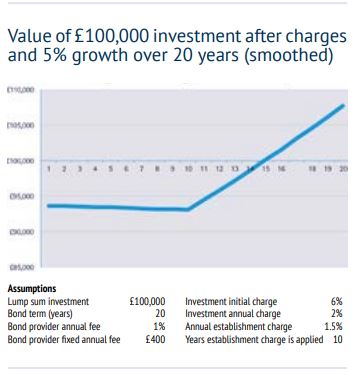
As the graph shows, the investor in question would only start making money after 15 years. By the end of the 20 years, their £100,000 investment would be worth £107,768 – that means an abysmal effective return of just 0.08%, despite the steady rise in the stock market. This is because of the £88,698 paid out in total in charges.
But what if the investments perform really well?
What happens to the graph if the same investment enjoys average annual growth of 15%? To put things in context, in the period from 1900 to 2013, developed markets have enjoyed an average annual growth of 8.3%, whilst emerging markets have a growth of 7.4%.
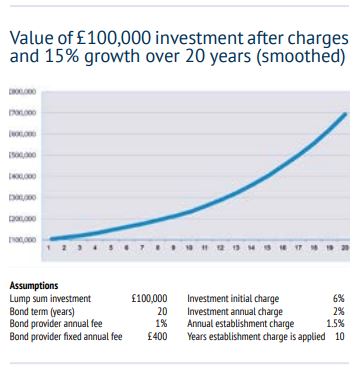
With an average annual growth of 15%, the graph looks remarkably less scary than the previous one. Or does it?
It is true the investor starts making money in the first year and by the end his £100,000 has turned into £695,318. However, they will have paid £226,259 in charges (a higher amount than the previous example because of the higher fund value). Moreover, despite the prolonged market rally, because of the charges, they will have experienced an effective average return of just 5.95% a year. Charges have swallowed up nearly two thirds of the market growth.
It is like swimming with weights. You need a lot of effort and energy just to stay afloat, and when you move forward, you do so much more slowly and painfully than you would otherwise.
So where does your money go?
A significant chunk is used to fund the adviser’s commission. The rest goes to the product provider and the investment manager.
When the adviser sells the bond to the client, at the outset they receive in the region of 7% upfront from the bond provider. The 1.5% annual establishment charge you pay for the first 5-10 years funds this and can add up to 15% over time. If you leave the offshore bond before paying off all these charges, they will be clawed back from you, resulting in either horrible penalties or a lack of flexibility.
When the adviser recommends the investments, they can also receive a large proportion, if not the whole, of the investment initial charge. This is typically 4%-8% but on some investments, such as structured products and hedge funds, it could be much more. This is either directly deducted from your original investment or ‘back-end loaded’, so you cannot see it – just like the bond itself (thereby accentuating the lack of flexibility).
After selling the product, the broker or ‘adviser’ is unlikely to receive any further commission. For instance, they do not normally receive any part of the annual investment charge. This means they will not benefit if your investments grow in value and conversely will not suffer if they fall. Quite simply, their interests are not aligned with yours.
Why such crippling charges?
Such shocking charges are the result of the way these types of financial products are sold, combined with a lack of competition and lax regulation. The international financial services industry today bears a striking resemblance to the UK financial services industry 30 years ago.
Most products are sold through international brokerages and their direct sales teams who masquerade (but are nothing of the sort) as ‘financial advisers. They need to be paid, and so do the product providers. As all the main protagonists use the same business model and make money the same way, it is in nobody’s interest to apply fairer prices. Nor is there any regulation that prescribes what a fair price should be.
The odds are stacked against you
As the graphs show, you need some pretty exceptional investment performance over a long time to have any growth left after paying the extortionate charges.
How do you achieve that?
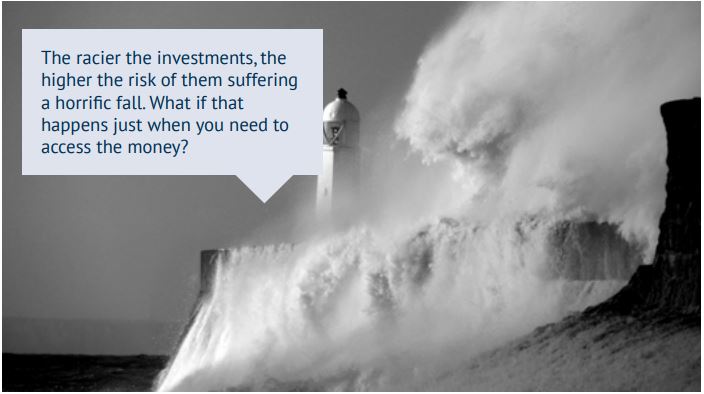
In many cases, the adviser’s answer is to recommend racier investments that on paper look as though they could deliver that exceptional performance.
However, the racier the investments, the higher the risk of them suffering a horrific fall. If that horrific fall happens within the first few years from the establishment of the bond, there might be a chance
to recover. But what if it happens a couple of years before you need access to the money?
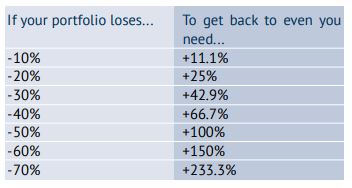
To add insult to injury, these types of investment

often attract much higher charges than more mainstream ones. So, typically an adviser profits much more from recommending them.
This does not mean highly risky investments should always be avoided.
They can play an important role as part of a well-balanced and diversified portfolio, subject to in-depth research and continuous monitoring.
However, many of the portfolios we see are stuffed full of expensive esoteric investments (e.g. structured products, hedge funds, etc.), dangerously undiversified. This leaves the client at risk of losing a huge portion, if not indeed all, of their investment.
In my experience, this is because of the two reasons I have mentioned earlier:
1. A well-diversified portfolio will aim to avoid excessive volatility (the very high highs and very low lows typical of more specialist investments). However, this means the potential returns of a diversified portfolio may well not be enough to cover the charges.
2. As a rule of thumb, the more ‘alternative’ and opaque the investment, the higher the commission the salesman receives, therefore, sadly, the more likely they are to recommend it.
Would you be happy to have an investment portfolio that is in effect an elaborate gamble, in which the
only guaranteed winner is the outwardly trustworthy, charismatic broker?
In addition, this type of portfolio is far from a ‘buy and forget’ investment. It calls for in-depth research both at the outset and ongoing. Yet, in my experience, very few IFAs have the time, resources, expertise, or even incentive to conduct quantitative and qualitative analysis on the investments they recommend.
What could you do?
If you have even the slightest concern that you have been sold an expensive offshore bond, loaded with unsuitable investments, you should look into it.
If I were reviewing my own portfolio, the main questions I would ask are:
1. How much am I paying in charges – and, indeed, what charges am I paying?
2. Where is my money invested? I would like to see a full breakdown of all the investments in my bond.
3. How have the investments performed to date? And how does that compare to the relevant benchmark? So, for instance, if I hold a fund investing in emerging markets, I would want to see its performance compared to the average of the sector.
4. How diversified is my portfolio? I would want
to see what exposure I have to different asset classes, sectors, and geographical regions.
5. How risky is my portfolio? I would want to make sure I am happy the risk profile matches my appetite for risk.
6. Are there any alternatives that offer lower costs, better potential returns, or ideally both?
7. What are the charges or penalties if I were to change my investments or transfer out of the bond?
This information should be included in statements or valuations you might have received from your adviser.
Failing that, you could contact the bond provider and the investment companies to find out the different elements you need to unwrap the opaque charges and build up the full picture.
This could be time-consuming and potentially involve dealing with a number of companies, with different procedures and rules.
Can someone help?
CLIENT CASE STUDY
“I now realise I’ve been funding my former advisers’ retirement, not my own”
David Brown | Development Manager | Brunei Darussalam
“I’m a Chartered Engineer and have worked in the oil and gas sector around the world for 20 years. In that time, I’ve met various outwardly trustworthy international financial advisers who have let me down time and again.
Being analytical, I’m predominantly interested in the performance of my investments. Over the years I’ve consistently failed to get any. Worse, I’ve lost money.
I was looking for a fresh approach when a friend from my military days introduced me to AES International.
I now realize I’ve been funding my former advisers’ retirement, not my own. AES International applies a rigorous and analytical method of reviewing risk against expected return. Their transparent cash flow modeling approach is something my wife and I have been seeking for years. It’s entirely different from my previous experiences with financial advice.
I now understand the importance of cash flow modeling, have a detailed plan which will save me tens of thousands of pounds, and am really clear on the performance I need to retire well.
My wife and I were so relieved to come on board, feel very confident in our choice, and look forward to a relationship that both saves and makes us money.”
What happens next?
Why should you trust AES International?
You are probably thinking: “Why should I trust you? Aren’t you just another financial adviser?”
I do not blame you. As this guide shows, the international financial advice industry has done little over the years to deserve clients’ trust.
I discovered this myself in the most unusual way.
Like most of the Board of AES International, I was previously a British Army Officer. We have all been inculcated with the military values of integrity, and are passionate about maintaining the highest standards of professionalism.
I was first commissioned into the Queen’s Guards, then was selected for service with the Airborne Forces. This led me to travel around the world and meet fellow servicemen and expats.
From talking to them, I was appalled at the poor quality of much international financial advice.
So I obtained the necessary qualifications and started AES International in 2004.
With other like-minded professionals, I embarked on a crusade to transform a toxic industry that manufactures and vends ‘products’ into a profession that helps people understand, protect and build their assets better than any other organization.
Because of my Army background, our first clients were soldiers, military and logistical contractors based in hostile territories.
Then, as the company grew, we extended our transparent and professional services to other expats.
By 2012, we were Britain’s fastest-growing financial business according to The Sunday Times Fast Track 100.
In the last few years, we have won over 26 financial awards, including Best Global Offshore Banking Team in 2014, Best Private Wealth Manager Adviser in the UAE in 2014, and Best International Financial Planning Firm in 2013.
What makes us different?
Our organization’s ethos is like the military’s. The highest standards of professionalism and integrity are not only expected but demanded.
1. A beacon of British standards abroad: Our UK business is authorized by the FCA (including for pension transfers) and we hold investment and insurance licenses in 36 different countries. Our professionally qualified advisers challenge the status quo and all adhere to a partnership code that governs the uniquely transparent and professional way we interact with our clients. We understand the international/cross-border marketplace and all its challenges as this is all we focus upon.
2. A different business model, where the company’s interests are perfectly aligned with our clients’: Unlike most international IFAs, we do not rely on huge initial commissions. Instead, we retain a very small percentage of the amount you have invested with us over time.
This means you pay substantially less initial commission and do not have to wait years before seeing any growth in your investments.
It also means our best interest lies both in recommending decent products and investments and also looking after you and your portfolio over time. The more your investments grow, the better we serve you and the longer you stay with us, the more we make. If we disappoint you and you leave us, we lose money.
3. Centralised Investment Research: Investment performance is critical and we believe it is wrong to put your faith in an individual financial adviser to select and manage your portfolio.
This is why we have created an independent and centralized Investment Team. They are responsible for ensuring clients have access to the very best funds which are of sufficient quality, match client risk profiles/expectations, and are managed in an appropriate manner.
The Investment Team applies quantitative and qualitative analysis to arrive at a White List of Funds – the funds they believe most likely to deliver superior returns over time across different sectors and risk profiles.
We recognize that no single investment house has a monopoly of investment expertise, so we remain

CLIENT CASE STUDY

“I have much greater security and confidence”
Louiza May | International Teacher | UAE
“As an international teacher and single parent, my life is hectic. I haven’t had the time or knowledge to get involved with my finances.
Like many teachers, I was indirectly introduced to someone I now know was an unregulated international adviser. He made some fantastic sounding promises regarding my UK Teachers Pension Scheme: enhanced benefits and flexibility to secure my daughter’s future.
Although I never received a clear explanation of how the adviser made money, he was so friendly and attentive on his visits to the school, by phone, and by email that I proceeded with his recommendation. I moved my pension to a QROPS which the adviser then invested into a Royal London 360 Offshore Bond.
Almost immediately after this, I met AES International. I was shocked to discover I had inadvertently forfeited my guaranteed pension rights and inefficiently taken out a tax wrapper within a tax wrapper. I also realized the QROPS, Offshore Bond and the investments within it were most likely unsuitable. AES also showed me how
to read and understand my RL 360 valuation so I saw I had immediately lost 20% of the transfer in value in hidden charges.
I had mistakenly put my faith in a charismatic individual, not an organization. I, therefore, completed a one-page form and switched the agency of my investment to AES International.
The fact that AES International is so highly regulated, has won a lot of awards, is a large, completely, and utterly transparent international business with a centralized investment team, has given me genuine and well-founded peace of mind – my daughter’s future is safe and secure. I can now hope my pension will recover in value over time.
I now understand how the allegedly ‘free’ advice works and stand to make savings of £100s of pounds a year whilst hopefully getting the performance my retirement account really deserves it.
Overall, I have much greater security and confidence moving forwards.
fiercely independent, and carefully select a small number of both passive and active managers of truly outstanding ability.
This process delivers transparency, peace of mind, security, and performance which are simply unattainable through a single adviser.
4. Centralised compliance and risk management: we have a compliance team based in the UK. They review every single piece of information and every
recommendation we send our clients worldwide, to ensure it adheres to the highest regulatory principles regardless of jurisdiction and is in the client’s best interest. This is not a requirement. It is a choice.
5. A team-based approach to servicing: Our contact centre is open 6am-5pm GMT. It is staffed by QFC Level 4 qualified advisers and client service professionals available to answer questions and support you and where appropriate your adviser in providing a high level of ongoing service.
We are happy to take the strain
You may be one of the few investors whose bond has been responsibly set up and consequently is not crippled by exorbitant charges. If so, the free review will confirm this and help you put any concerns to one side.
If, however, your offshore bonds were set up less than responsibly, as is sadly all too often the case, we
are happy to take the strain. Simply click on the button below and request a no-obligation consultation with a member of our centralized investment team.
We can help you stop building someone else’s wealth and concentrate on building your own.
IMPORTANT NOTE: This guide aims to provide general information on offshore investment bonds. It is a short and simplified summary of a complex subject, so please do not make any decisions based solely on the contents of this guide. Whether or not an offshore investment bond and the investments within it are appropriate to you will depend on many factors, including your individual needs and circumstances.